Request an Appointment or Give us a call
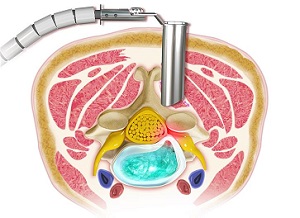
What is Tubular Microdiscectomy?
Tubular microdiscectomy is a minimally invasive surgical procedure used to treat herniated discs in the spine, particularly in the lumbar (lower back) region. The procedure involves making a small incision and using a tubular retractor to access the affected area of the spine.
A herniated disc is a condition in which the outer fibers (annulus) of the intervertebral disc are damaged, causing the soft inner material of the nucleus pulposus to rupture out of its space. A herniated disc, common in the lumbar spine, occurs when there is a tear in the outer lining of the disc (annulus fibrosus). This causes the inner jelly-like material (nucleus pulposus) to leak out and place pressure on the adjacent spinal nerve root. It is the most common cause of lower back pain and pain that radiates down the leg (radiculopathy).
Indications
Tubular microdiscectomy is primarily recommended when conservative treatment measures such as medications, physical therapy, or epidural injections have failed to treat herniated discs in the lumbar spine that are causing symptoms such as back pain, leg pain, or numbness due to compression of spinal nerves.
Preparation for Tubular Microdiscectomy
Before the surgery, your healthcare provider will conduct a thorough medical evaluation, including a review of your medical history, current medications, supplements, and allergies. Imaging studies such as X-rays, MRI (Magnetic Resonance Imaging), or CT (Computed Tomography) scans may be performed to assess the anatomy and condition of the lumbar spine or herniated disc and guide the surgical planning. Your surgeon may instruct you to avoid certain medications and supplements that can thin the blood and increase the risk of bleeding during surgery. You should not consume solids or liquids at least 8 hours prior to surgery. A signed informed consent form will be obtained from you after the risks and benefits of the surgery have been explained.
Procedure for Tubular Microdiscectomy
In general, the procedure for tubular microdiscectomy involves the following steps:
- The patient is positioned on the operating table, usually lying face down.
- Anesthesia is administered to ensure the patient is comfortable and pain-free during the surgery.
- The surgeon makes a small incision, typically less than an inch in size, in the skin above the affected area of the lumbar spine.
- A tubular retractor, which is a cylindrical tube-like device, is inserted through the incision and gently guided down to the spine.
- The tubular retractor helps create a pathway to the herniated disc while minimizing damage to surrounding muscles, ligaments, and tissues.
- The surgeon uses a surgical microscope to visualize the spine and the herniated disc. The magnified view provided by the operating microscope allows the surgeon to see the structures of the spine in great detail.
- Using specialized surgical instruments, the surgeon carefully removes the portion of the herniated disc that is pressing on the spinal nerves. This relieves pressure on the nerves and alleviates symptoms such as pain, numbness, or weakness in the legs.
- After the disc removal is complete, the tubular retractor is gently removed from the incision. The incision is closed with sutures or adhesive strips.
Postoperative Care and Recovery
After surgery, you will be taken to the recovery room where medical staff will monitor your vital signs and ensure you wake up safely from anesthesia. After waking up, you will receive instructions on postoperative care, including pain management, activity restrictions, exercises, mobility guidelines, and wound care. Due to the minimally invasive nature of the surgery, you should be discharged from the hospital in a day or two by your surgeon. Follow-up appointments will be scheduled to monitor your healing progress and adjust your rehabilitation plan as needed to optimize recovery and long-term outcomes.
Risks and Complications
Tubular microdiscectomy is considered a relatively safe procedure. However, as with any procedure, some risks and complications may occur such as infection, bleeding, nerve injury, blood clots, and anesthesia risks.
Benefits
Tubular microdiscectomy offers several advantages over open surgery, including smaller incisions, less damage to surrounding tissues, reduced blood loss, shorter hospital stay, and faster recovery time.
For more information about our services or to schedule an appointment, call us at or click here to request an appointment online. We’ll respond to you as soon as possible.